Mechanical tests for polymers measure how a plastic or rubber deforms and eventually fails under load. The core set — tensile, flexural, compressive, impact, and hardness — maps to ASTM and ISO standards that specify specimen shape, conditioning, and speed. LabsCubed's CubeOne and CubeTen platforms automate specimen handling, alignment, and data capture so results are repeatable across operators. In this guide you'll learn what each test measures, which standards apply, where manual workflows introduce variability, and how automation closes that gap.
What are mechanical tests for polymers?
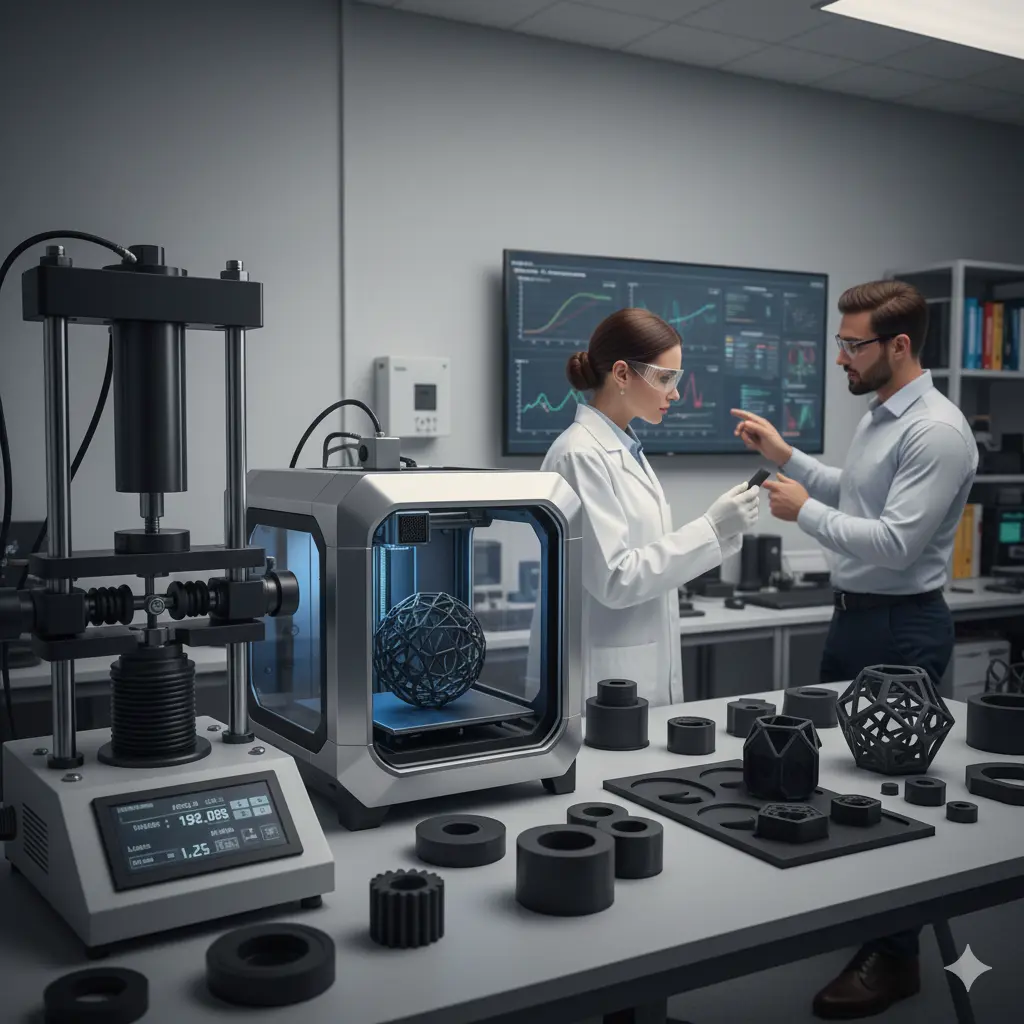
Mechanical tests for polymers are standardized experiments that quantify how a polymer specimen responds to force. They report properties like tensile strength, modulus, elongation at break, flexural strength, impact energy, and hardness. Because polymers are viscoelastic and temperature-sensitive, results depend heavily on specimen geometry, environmental conditioning, and strain rate. Typical audiences include QA labs, R&D groups, and material suppliers who need repeatable data for datasheets, incoming inspection, or design validation.
What test types are used to measure polymer mechanical properties?
The six mechanical tests most labs run on polymers are tensile, flexural, compressive, impact, hardness, and shear or friction. Each targets a specific loading mode and, taken together, they describe a polymer's stiffness, strength, ductility, and toughness. Most fall under an ASTM or ISO standard that fixes specimen dimensions, environmental conditioning, and loading rate so results are comparable across labs.
Tensile testing (ASTM D638 / ISO 527)
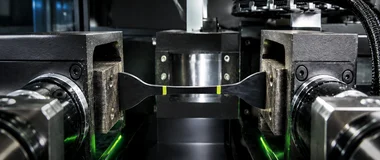
Tensile testing pulls a dogbone specimen at a fixed crosshead speed until it yields or breaks. It reports tensile strength, Young's modulus, and elongation at break — the properties that appear at the top of virtually every polymer datasheet. ASTM D638 and ISO 527 are the dominant standards for rigid plastics; ASTM D412 covers rubber and elastomers; ASTM D882 covers thin plastic film. For a deeper walkthrough, see our polymer tensile test procedure guide.
Flexural testing (ASTM D790 / ISO 178)
Flexural testing uses a three-point bend on a rectangular bar to measure flexural strength and flexural modulus. It's the go-to test for rigid plastics used as structural elements — housings, brackets, panels — because it captures how the material behaves in bending, which is closer to real service loads than pure tension. ASTM D790 and ISO 178 are the reference standards; both specify span-to-depth ratios and strain rates that must be followed precisely for the modulus to be valid.
Compressive testing (ASTM D695 / ISO 604)
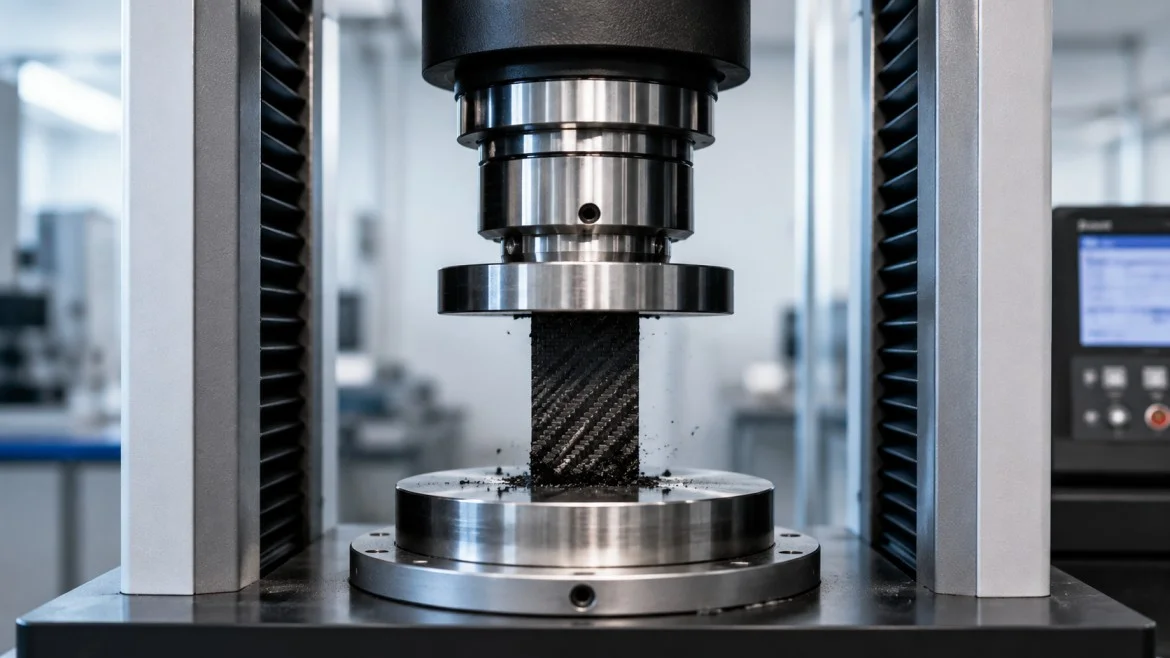
Compressive testing loads a small block or cylinder in axial compression until yield or a defined strain. It reports compressive strength and modulus and is essential for foam, dense elastomers, and structural polymers used as pads, bumpers, or bearings. ASTM D695 and ISO 604 are the reference methods. Alignment matters: a compressive specimen loaded off-axis produces artificially low strength readings.
Impact testing (ASTM D256 / ISO 180)
Impact testing measures the energy absorbed by a notched specimen when it is struck by a pendulum. Charpy (unnotched or notched, horizontal support) and Izod (notched, vertical cantilever) are the two dominant fixtures. ASTM D256 (Izod) and ISO 180 are the standards for plastics; ASTM D6110 covers Charpy on plastics. Notch geometry is the single biggest source of scatter — a poorly cut notch can shift the result by up to 20% or more.
Hardness testing (ASTM D2240 / ISO 868)
Hardness testing measures a polymer's resistance to indentation. Shore A (soft rubbers, elastomers) and Shore D (rigid plastics, hard rubbers) are the standard durometer scales, defined in ASTM D2240 and ISO 868. Rockwell R and M scales apply to harder engineering plastics under ASTM D785. For a broader treatment see our polymer mechanical testing methods and standards overview, or the specific hardness of polypropylene guide for a worked example.
Fatigue, DMA, and creep
Beyond the static set, dynamic mechanical analysis (DMA), tension–tension fatigue (ASTM D7791), and creep (ASTM D2990) are used when the part will see cyclic loads, long service intervals, or elevated temperatures. These are usually run in R&D rather than production QA because a single test can take hours or days.
Which ASTM and ISO standards apply to polymer mechanical testing?
The core standards are ASTM D638 and ISO 527 for tension, ASTM D790 and ISO 178 for flexure, ASTM D695 and ISO 604 for compression, ASTM D256 and ISO 180 for Izod impact, and ASTM D2240 and ISO 868 for durometer hardness. Rubbers are typically tested under ASTM D412 for tension and ASTM D2240 for hardness. Choosing between an ASTM and ISO variant usually comes down to the datasheet convention of the customer or downstream regulator.
Manual vs. automated polymer mechanical testing
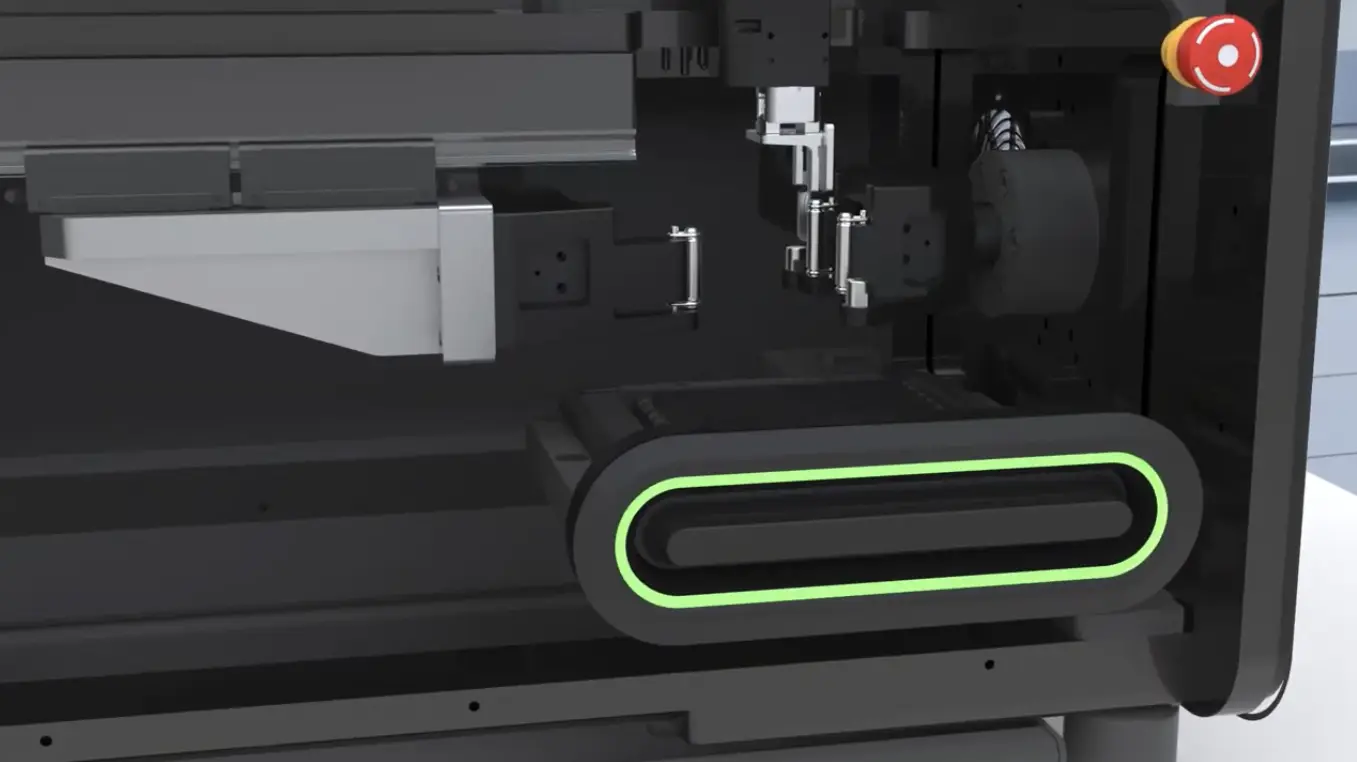
Most polymer labs still run these tests manually: an operator picks a specimen from a tray, measures it with a caliper, aligns it in the grips, sets the extensometer, hits start, and re-keys the result into a spreadsheet. That flow works, but it introduces two sources of variability the ASTM standards do not fully control: operator technique and manual data transcription. Automation targets both.
Manual testing
Recommended CubeOne / CubeTen
Specimen handling
Operator picks, measures, aligns each specimen
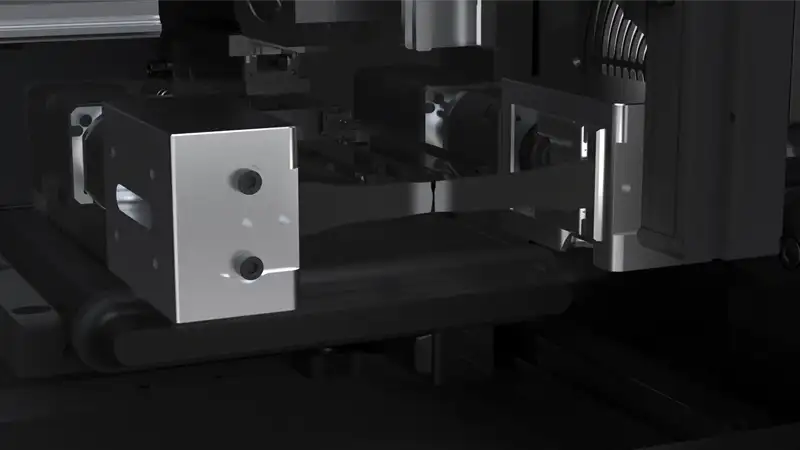
Robotic gripper, vision-based measurement
Alignment repeatability
Depends on operator; drifts between shifts
Repeatable to the frame, tight tolerance
Extensometer placement
Clipped on by hand; risk of slip
Automatic contact or non-contact
Data capture
Read + re-key into spreadsheet
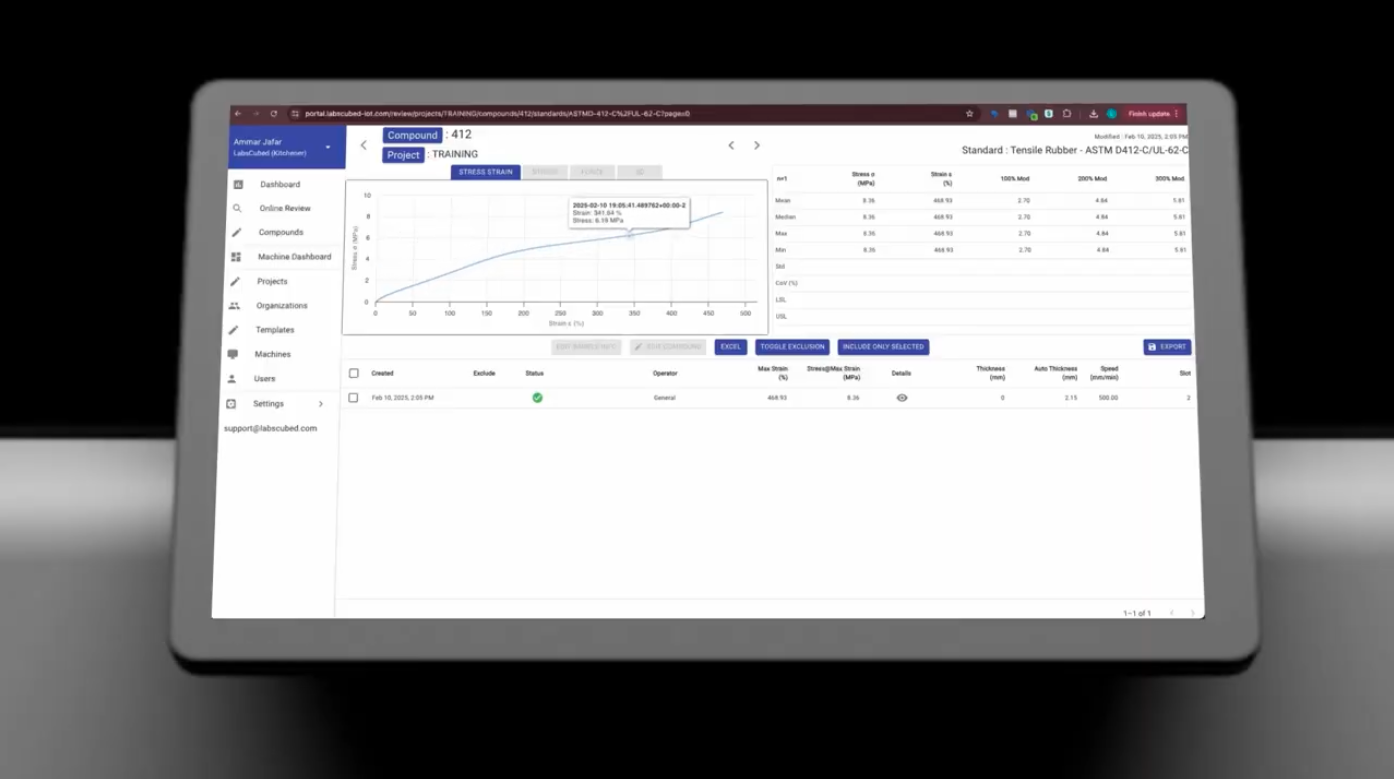
Direct write to audit-trail database
Throughput per shift
Typically 15–25 specimens
Up to 100+ unattended
Operator-to-operator variability
Present, hard to quantify
Effectively removed on handled steps
Audit trail
Spreadsheet + paper
Timestamped, per-specimen, exportable
The point isn't just speed — it's that automation reduces the variability introduced between operators, between shifts, and between labs. On a repeat-measurement run, that shows up as a tighter coefficient of variation on tensile strength and modulus.
Common mistakes in polymer mechanical testing
The following errors account for most of the between-lab scatter we see. Each one is fixable without new hardware — but each is also a strong argument for taking the step out of the operator's hands.
Skipping environmental conditioning. Most standards require 23 °C / 50% RH for at least 40 hours before testing. Skipping this can shift modulus by up to 15%.
Using the wrong specimen geometry. ASTM D638 alone defines five specimen types; reporting a Type I result against a Type IV geometry produces numbers that look right but aren't comparable.
Misaligned grips. Off-axis loading in tension produces low apparent strength and inflated variability.
Poor notch preparation for impact. Notch tip radius is specified — a dull cutter opens the radius and lowers reported impact energy.
Ignoring crosshead speed. Polymers are strain-rate sensitive; follow the speed in the standard and log it.
Manual data transcription. Every re-keyed number is a chance for a typo; automated capture at the tester eliminates that class of error entirely.
Frequently asked questions
What are the most common mechanical tests for polymers?
The most common mechanical tests for polymers are tensile (ASTM D638, ISO 527), flexural (ASTM D790, ISO 178), compressive (ASTM D695, ISO 604), Izod impact (ASTM D256, ISO 180), and durometer hardness (ASTM D2240, ISO 868). Together they characterize stiffness, strength, ductility, and toughness for datasheet reporting and incoming QA.
How do you choose between ASTM and ISO polymer testing standards?
Choose based on your customer's specification or downstream regulator. ASTM standards dominate North American datasheets and automotive supply chains; ISO standards dominate European and global datasheets. The physics is the same, but specimen dimensions, conditioning windows, and reporting conventions differ. Running both requires re-machining specimens and re-conditioning.
Why do polymer test results vary so much between labs?
Polymer results vary because polymers are viscoelastic and sensitive to conditioning, specimen geometry, alignment, and strain rate. Two labs running the same nominal ASTM D638 test can produce different modulus numbers if their humidity, grip alignment, or extensometer placement differ. Automation reduces the operator-controlled part of that variability but does not remove material-driven scatter.
How long does mechanical testing for polymers take?
A single tensile or flexural test takes only a few minutes, but a full QA batch of 5–10 specimens per material plus conditioning, measurement, and data entry can consume most of a shift. Automated platforms like CubeOne and CubeTen can run those batches unattended, which is where the throughput gain comes from — not from making any single test faster.
Can one machine run all of these polymer tests?
A universal testing machine can run tension, flexure, and compression by swapping fixtures. Impact and durometer hardness use separate dedicated instruments. Automated cells like CubeTen coordinate the frame, fixtures, environmental chamber, and data capture in one workflow so a lab can move between test types without reconfiguring by hand.
Where automation fits in a polymer QA lab
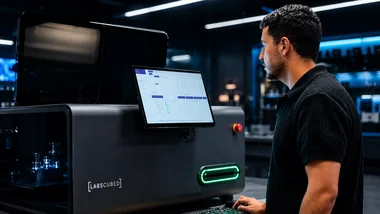
If the reason you're measuring polymers is to release material to production, the biggest wins from automation are throughput and repeatability, not raw test speed. Robotic specimen handling, vision-based measurement, and direct-to-database capture remove the manual steps where operator-to-operator variability creeps in. That's the wedge LabsCubed's CubeOne (single-frame) and CubeTen (high-throughput) systems target. For a broader look at how automated systems compare to manual benches, see our guide to automated tensile testing.
See how automation fits your polymer QA workflow
Book a 20-minute walkthrough of CubeOne and CubeTen. We'll bring your specimen mix, your standards, and your cycle time.
We design and deploy robotic testing platforms for plastics, rubber, and composite labs. We publish about the workflows we see in the field — specimen prep, grip alignment, data capture — and how automation reduces the operator-controlled variability inside them.
More expert insights and practical solutions to advance your material testing expertise.
Tensile Testing
Lab Automation
7 min read
Robotic Material Testing: The Complete Guide to Automating Your Lab
Learn how robotic material testing improves throughput, repeatability, and data traceability in plastics, rubber, and composite laboratories.
Tensile Testing
Lab Automation
6 min read
Automated Tensile Testing: How Labs Cut Cycle Time Up to 85%
Learn how automated tensile testing improves throughput, repeatability, and data traceability in plastics, rubber, and composite testing labs.
Tensile Testing
Lab Automation
6 min read
Composite Material Testing: Methods, Standards, and Automation
Learn the key composite material testing methods, ASTM standards, and how automation improves throughput, repeatability, and data quality.
Tensile Testing
Lab Automation
6 min read
Tensile Testing Machine Guide for Plastics & Rubber Labs
Learn how to choose the right tensile testing machine for plastics and rubber, and how automation improves throughput and repeatability.
Flexure Testing
5 minutes
ASTM D790/ISO 178 Explained: Everything You Need to Know About Plastic Flexural Testing
Mastering ASTM D790 & ISO 178: Why the Future of Flexural Testing is Horizontal
Stop wasting time on manual grip changes and calibration. Learn the essentials of plastic flexural testing and discover how CubeFlex is revolutionizing the lab with automated, horizontal 3-point bending.
Lab Automation
10 min
Fatigue Testing in Rubber Compounds: Understanding Long-Term Performance
Explore the fundamentals of fatigue testing for rubber compounds, from traditional to 3D printed materials. A guide for materials engineers and lab managers on ensuring long-term performance and durability.
Data
9 min
How Temperature and Humidity Affects Tensile Strength in Plastics
Discover how environmental conditions like temperature and humidity impact the tensile strength of plastics, including 3D printed parts. Essential insights for R&D managers and lab supervisors in plastics testing.
Data
7 min
Understanding the Numbers: Tensile Data Collection and Saving Time with Automation
This article explains the importance of understanding and utilizing tensile testing data for better material selection. It highlights how raw test data, particularly the stress-strain curve, provides crucial material properties like ultimate tensile strength, yield strength, elongation at break, and Young's Modulus.
Lab Automation
8 min
What is Tensile Testing & Why it Matters in Materials Labs
This article introduces tensile testing, its applications, common laboratory challenges, and practical solutions for obtaining accurate results.
.webp)